
Introduction
I was inspired to write this by my brothers and sisters in arms, a man on a plane, my students, Frans P.B. Osinga[1], and John Boyd. It is dedicated to James and Joanna Marvin for all they’ve paid forward to the rest of us. James taught me that;
“Slow is smooth, and smooth is fast.”
My aim is to share my ideas about John Boyd’s OODA loop model. It is incredibly easy to understand and remember. Let’s review:
 Observe
Sense your environment. It is what you see, hear, smell, etc. Receive data. Since OODA is a cycle, each observe step is like a frame in a movie. Technology greatly enhances our ability to sense the world but we are only able to observe a minuscule portion in any moment. Even that soda-straw view can easily overload our mental bandwidth. Click the link below to watch one of the world’s most interesting and accomplished physicists’ description of how we sense waves.
Richard Feynman talks about the nature of waves
 Orient
Focus on what is important/urgent. Find signals in the noise. Interpret the data. Recognize Patterns. This step is key to one of my main points; the loops form a hierarchy. At this step you choose not only what you will pay attention in the data from the previous step, but at what level in the hierarchy. Complexity ramps up quickly here, so I will discuss in greater detail below. In the meantime, I recommend the Eisenhower Decision Matrix, which is much simpler than it sounds; Explanation of the Eisenhower Decision Matrix.
For the TLDR (Too Long, Didn’t Read) crowd; this is half the secret sauce..use your precious thinking time on the right topic.


Watch The Martian, starring Matt Damon for some exciting food for thought on this.
 Decide
Figure out what to do about it. Imagine how to make it better. Design experiment. Imagine options, and choose amongst them. Remember that no decision will be perfect because you cannot have perfect knowledge in the Observe step. We are prone to a variety of mental errors, often make poor assumptions, waste precious time and resources on the wrong subject, etc.
Good news comes in the second half of the secret sauce…you don’t have to outrun the bear, just the other guy. Remember, this model assumes a competitive environment, so you don’t measure yourself against perfection, measure against the competition.
The ability to use your OODA loops cooperatively with others allows you to outcompete at a higher level.
 Act
Act
Do as you decided. Carry out the experiment. Execute. This is the physical expression of what you command and is limited by your skill and power. It is enhanced in successful groups and may be greatly amplified by technology.
Go back to observe. You are now, hopefully, anticipating a result and beginning to think ahead. That’s the end of the quick version. It’s a simple explanation of how we survive in a competitiveenvironment. It’s a model for how we adapt to changing circumstances. It’s a useful tool for anyone in any field from the military, to science, law, and so on. You can apply the OODA model to anything that is ‘conscious’; a person, an animal, a group, an AI, etc.
As a “natural” or metaphorical model of adaptation, the OODA loop is seductively easy to understand on a basic level but offers far more than one might expect. In short, all conscious entities and cooperative groupings of such entities may have their foundational programming represented as a looping Observe, Orient, Decide, Act cycle, or over time, as a nested spiral. It serves as a metacognitive tool for improving how we think, plan, compete, and survive.
 Standing on Boyd’s shoulders
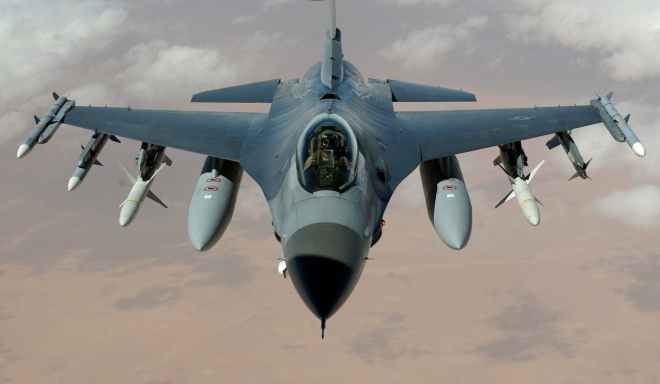
John Boyd was an apex predator. As a USAF fighter pilot he soared atop the technological pyramid of mano-a-mano warfare. As an instructor he was one of the best, and as USAF Weapons School cadre, best of the best.
Quick Overview of Boyd
Legend has it that Boyd could wax the tail of any other fighter pilot in 40 seconds or less. He literally “wrote the book” – the tactics manual, for the Weapons School. He, along with Thomas Christie, created Energy-Maneuverability (EM) theory. As a staff officer, he laid the groundwork for development of the modern fighter by incorporating lessons learned from past conflicts. He conceived of the “left hook” opening attack of the first Gulf War. His thinking included ideas from Gödel and Heisenberg, but he is mostly famously known for creating the Boyd Cycle or OODA Loop.
Fighter Pilot OODA
Many think of Boyd’s OODA loop in association with his role as a fighter pilot. This is a fruitful and interesting perspective because in Boyd’s day, the speed, violence and sophistication of an aerial dogfight represented the pinnacle of one on one combat as fighter pilots sought to outturn and outshoot each other. The thinking entity with the best Observe, Orient, Decide, Act loop lived on. OODA, however, can be used in a larger setting than one on one.
“He who can handle the quickest rate of change survives.” – John Boyd
 Hierarchy
OODA loops can be thought of as hierarchical. Tiny hyper fast OODA loops are the subroutines of slower OODA loops on the next level and so on. Neurological images show clouds of thought in human brains changing moment by moment. If we assume that survival is the ultimate goal, then these clouds represent a hierarchy of Orient/Decide steps to achieve it. Breath, eat, sleep, fight, flight; each is part of survival on some level. Your brain is handling autonomic functions, generating hormonal responses, forming/using habits, honoring customs, following training, etc. etc. I imagine a simplified version of Maslow’s Hierarchy (Boyd studied Maslow) with a focus on health/survival ordered from bottom up. It roughly follows the evolution of the human brain from brain stem to neocortex.
Your mind, as a result of everything that brought your physical brain to its current condition, under this hierarchical OODA model, is reacting to its environment. The most critical elements of your survival are the most basic; temperature, pressure, atmosphere, water, food, etc. Your body and brain monitor the status of these elements and respond accordingly. The demands of more basic elements are more regularly and easily met but if not, warrant urgent attention based on how fundamental they are. If you couldn’t breathe, for instance, it would be a big deal.
Once the demands are met, your attention may move elsewhere. However, switching your orientation has a cost. If you change conscious focus, there is a transition time.
Beyond individual survival, we communicate and cooperate to compete as a group. Groups cooperate with other groups and so on. The OODA model scales to help understand and optimize thinking at these levels also. Many professional and military groups use models very similar to the OODA loop to describe their planning cycles. The following is an example of how a military flight crew acts as a unified OODA unit in a hierarchical stack of other units.
Slower, wider, loops: Crew OODA
An AC-130 is a side-firing Special Operations attack aircraft flown by a relatively large crew. The aircraft flies in left hand orbits around its target area, generally in close coordination with a ground party. Although the Aircraft Commander is the decision-making authority, it is a ‘Crew OODA’. The hierarchy is something like; crewmember, crew, mission assets (everything from the ground party to the weather forecaster), and up the chain to everyone involved in the Nation’s security.
A well-rehearsed, cooperative team that coordinates and contributes their cycles for a group goal or goal(s) best accomplishes crew OODA. On an old ‘H’ Model gunship, the Pilot, Copilot, Engineer, Navigator, Fire Control Officer (FCO), Electronic Warfare Officer (EWO), Sensor Operators, Gunners, and Loadmaster all made critical contributions during various phases of flight.[i] Their individual OODA Loops must coincide and mesh with those of every other member of the crew. The crew works in various subgroups depending on task; pilots and engineer may work on a given subtask, copilot and EWO, FCO and Gunners, etc. A planned timeline, the environment, command and control inputs, and most importantly – the needs of the mission drive actions.
This drives execution of a checklist, coordinated over communications relays between various groups on the crew. As they near their target, Navigators may be talking with a Tactical Air Control Party (TACP) as they guide the plane to and from the area, FCOs might be orienting the sensors on a specific target area and coordinating with the Lead Gunner on gun and ammo selection, Sensor Operators are following Gunship Rule 1: Find the friendlies first, then scan for enemies/threats with sensitive Infrared and other sensors, EWO’s are listening to select electromagnetic bandwidths and C2, Gunners are loading massive rounds into the guns (often in bitter cold, near total darkness, and with heavy gear on), and the Loadmaster is looking for threats through a plastic bubble in the bottom of the aircraft. The sound of a good gunship crew on comms as they roll in over a target right on time is the prelude to the symphony of precision firepower that follows the TACP announcing, “Rounds on target, fire for effect”.
Each crewmember has a rehearsed set of duties that constitute their planned contribution to the crew OODA. At any given time, each may be at any stage of an OODA Loop at various levels of abstraction. Any crewmember may reorient the attention of the entire crew based on a threat to the crew, aircraft, or mission. Once the problem is identified the entire crew immediately resynchronizes all activities in a pre-scripted and rehearsed order. Once the mission is complete, good crews conduct a critical debrief then incorporate lessons learned.
Our crew OODA traditionally supports special operations on the ground. Our OODA fits theirs as part of a larger ‘crew’ effort and so on. The ground party enjoys the benefit of a self-contained flying air-to-ground kill chain for many hours or until the gunship runs out of ammo. Ground controllers can, in various ways, tap into the sensing capabilities, communications, and firepower of the gunship to achieve their objective. This arrangement has proven very effective.
So What?
Fractal OODA spirals reflect the complexity of working together as a team or crew or cooperation in general. Rules of thumb learned on one level can be applied to the next. When you think of our power to Observe, for instance, you realize three things. First, we can only observe a tiny portion of the universe at any one moment. Second, we can be blinded by too much input, literally too much noise. Our machines ability to present more data often makes this worse. Lastly, your observations are competing with the observations of your enemy. They don’t have to be perfect, just better than your opponent.
I remember vividly a mission over Afghanistan prior to which my erstwhile Navigator had been given yet another laptop with the latest communications gizmo. No training, no manual. After having to deal with a failing disk drive, etc. in the heat of working with a ground team he asked “Pilot, do you want me to navigate or *&(^ with this thing?” I told him to Navigate (among the thousand other things he did) and forget the gizmo. He was simply opting to reduce noise created by a bloated and slow Observe capability. Smooth OODA Loops require corresponding bandwidth from step to step.
Gasping at, and grasping for, abstraction
All living organisms have some sort of sensory capability, some ability to interpret and organize incoming sensory information even if only by instinct, and act. Humans, arguably at the top of the food chain, have a brain that is capable of incredibly sophisticated Orientation capability and Decision-making. Additionally, humans have technologically enhanced their ability to Observe and to Act, in some ways, far beyond any other known living organisms. Technology that allows us to Observe the universe on the largest and the smallest level has improved at an incredible rate. We have telescopes and probes, large hadron colliders and smartphones. All allow us to increase our ability to perceive and increase the danger of drowning in data. Lastly, and perhaps most importantly, humans and their machines can act in groups to share Boyd cycles or portions of Boyd cycles for common goals at higher levels of abstraction. Communication, coordination, and trust make this possible.
Meta cognition (thinking about thinking)
The real secret to being an apex predator to develop your executive switching function to optimize level prioritization and eliminating mental errors. The answers this yields for me are very simple (eat more vegetables) but require discipline, a long attention span, and focus. Build and reinforce your basic survival requirements to create a strong and wide foundation for higher level requirements and to provide a reserve for black swan events. Easy Day! To be discussed in a future article….
[1] Frans P. B. Osinga, Science, Strategy and War: The strategic theory of John Boyd (New York: Routledge, 2007).
Science, Strategy and War: The Strategic Theory of John Boyd (Strategy and History)
[i] Gunship crew designations have changed as Air Force Special Operations Command has postured for adaptability.



 CutOnce