

Observe. Orient. Decide. Act. OODA. The OODA Spiral is a mental model well-suited for the fight against COVID-19. During each OODA Loop, we take in data, find patterns, choose options, then execute. The idea is to learn from each loop, then apply to the next. Good metrics anticipate and standardize the measurement of key data. Once adopted, they foster speed and precision each time we cycle from Observe to Orient.
We have made enormous progress on our ability to observe. We have gone from not knowing anything about SARS-Cov-2 (the virus that causes COVID-19) to having decoded its DNA. We know the majority of the symptoms. We can test for its presence at scale. We can detect antibodies. We can trace and track outbreaks. We have developed metrics.
Unfortunately, our current metrics are not being used in a systematic and practical way. Basic COVID-19 metrics such as cases or deaths are not measured according to a global standard. Nations and states have a variety of differences in methods of measuring, reporting, and credibility. Media highlights extreme examples, repeats politicized spin, and then moves on to the next topic. Measured decisions can’t be based on headlines, conflicting data or non-standardized metrics. If we don’t share information clearly we can’t act in unison. We have valuable and widely used metrics for hurricanes, earthquakes, etc., we can do the same for viral pandemics.
Knowing aircraft altitude is important. So we measure it. As aviation developed aircraft, it also developed precise ways to measure altitude, it’s rate of change, pressure altitude, etc.
We have evolved sophisticated capabilities based on this metric; we can fly at very low altitudes even in mountainous terrain at night, we can also fly at very high altitudes while managing pressurization and oxygen requirements, we can avoid weather and deconflict air traffic. Special Operations aircraft, for example, push these capabilities to even more impressive extremes. We have built a sophisticated system of flight control based on this simple but critical metric.

Compare this to our metrics for the COVID-19 global pandemic. We don’t use a standard common gauge so we come to different conclusions and make conflicting decisions. It’s as if we were flying through a bad thunderstorm and all the passengers were trying to control it simultaneously, based on clickbait.
One of the key insights of the OODA Loop model is to recognize threats in advance so we are prepared to act. The more important the threat (or opportunity) is, the more attention it deserves. Eventually, it makes sense to design measuring systems, trend indicators, alarms, and preplanned responses against chronic threats. We have done this for modern aircraft. This allows pilots to fly a known, safe, and universally understood altitude while reducing the amount of attention required. We need similar metrics, systems and responses for COVID-19 and future pandemics. This allows a controlled, focused response that drastically reduces the cost.
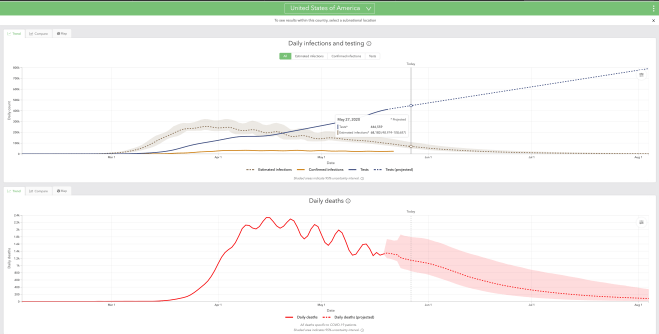
WHO, CDC, and many others graph counts of daily deaths, total deaths, hospital resource use, confirmed cases, number tested, percentage tested, recovered, serious/critical cases, R0 (reproductive rate), 25(OH)D, and much more. These data should be used to make decisions in the same way an altimeter is.
The metrics we select should come from a shared standard, then we can tailor them for specific environments. A good metric is as close as possible to ground truth and promotes good decisions. It’s worth knowing and continually improving the validity of the metrics we use.
 CutOnce